Managing money is one of the most important life skills, yet it is rarely taught in school. Many people enter adulthood without knowing how to plan their income, track expenses, or save consistently.
As a result, money often feels stressful, confusing, and out of control. This is exactly why a printable budget planner for beginners is such a powerful tool to have.
A printable budget planner is not just a sheet of paper. It’s a system that helps you understand your financial behavior. It shows you how you earn, how you spend, and how you save. More importantly, it helps you make better decisions with your money over time.
For beginners, the biggest problem is usually not income. It’s a lack of structure. Without structure, money disappears easily. I’m going to share with you here how a printable budget planner gives your money direction and purpose.

What Is a Printable Budget Planner?
First things first, you need to understand what a printable budget planner is.
A printable budget planner is a physical document you print and fill in manually to manage your finances. It allows you to write down your income, expenses, savings, and goals in one place.
Unlike digital budgeting apps that run automatically in the background, a printable planner forces you to be actively involved in your finances. You must think before you write. You must calculate before you spend. This active involvement is what builds good money habits.
A well-designed printable budget planner usually contains:
- A monthly overview page
- An income tracking section
- Fixed and variable expense sections
- A savings tracker
- A debt tracker
- A goals and notes section
Together, these sections create a complete financial picture.
Why Printable Budget Planners Work So Well for Beginners?
Most beginners fail at budgeting because they try to copy advanced financial systems meant for high-income earners. Those systems are often too hard and discouraging to start with.
Printable budget planners work because they are simple, slow, and intentional. When you write down your expenses by hand:
- You become more aware of your spending habits
- You notice patterns you never saw before
- You think twice before making unnecessary purchases
- You start treating money more seriously
There is also a psychological benefit. Writing creates a better connection between your brain and your actions. This is why people who write their goals are more likely to achieve them.
Yes, because budgeting is not just about numbers alone, it’s about behavior, and a printable budget planner for beginners changes behavior.
I know the next question you would want to ask is How does a printable budget planner change behavior, but don’t worry, this post has answered all the questions in your mind concerning this topic. Just continue reading to learn all.
Check Also: How to Set Up a Family Budget Plan Step by Step
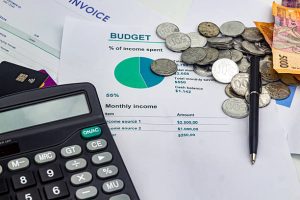
How a Printable Budget Planner Changes Your Money Mindset?
One of the biggest hidden benefits of using a printable budget planner is a mindset shift. Before budgeting:
- You spend first and think later
- You guess your balance
- You feel anxious about money
- You avoid checking your finances
After budgeting:
- You plan before spending
- You know your exact numbers
- You feel more confident
- You feel in control
Over time, this creates a healthy relationship with money. You stop seeing money as something mysterious and start seeing it as something manageable.
Understanding the Core Sections of a Budget Planner?
Let’s go deeper into each major section for better understanding.
1. Income Section Explained in Detail: This is where you record all money coming into your life or to your family. Many beginners only write their main salary and forget other income sources. You should include:
- Main job income
- Part-time work
- Freelance work
- Side hustles
- Business profits
- Allowances or gifts
Why does this matter? When you underestimate your income, your budget becomes known and planned. When you overestimate, you create false confidence. Accuracy is everything.
2. Fixed Expenses Explained in Detail: Fixed expenses are bills that stay mostly the same every month. These expenses form the foundation of your budget. Examples include:
- Rent or housing
- School fees
- Transportation
- Internet
- Electricity
- Water
These are priority expenses. They must be paid before anything else. If your fixed expenses are too high compared to your income, your budget will always feel tight. This section helps you identify whether your lifestyle matches your income.
3. Variable Expenses Explained in Detail: This is where most financial problems happen. Variable expenses include:
- Food
- Eating out
- Shopping
- Entertainment
- Data
- Subscriptions
These expenses change based on behavior, not necessity. This means they are the easiest places to save money. When beginners use a printable planner, they often discover that:
- Small daily spending is huge monthly
- Impulse buying is draining income
- Lifestyle inflation is real
This awareness alone can save you thousands over time.
4. Savings Section Explained in Detail: This is the most important section in your entire budget. Savings is what separates Financial stress from financial peace and Living month to month from building security.
You should save for:
- Emergency fund
- Education
- Health
- Travel
- Investments
- plans
Savings should not be “what is left”. It should be planned like rent or food. Even small savings build the habit when it comes to budgeting your income.
5. Debt Section Explained in Detail: If you have debt, this section becomes critical. You should write:
- Total debt amount
- Monthly payment
- Interest if known
- Remaining balance
Seeing your debt written down makes it real. It also motivates faster repayment. Many people avoid writing their debt because it feels uncomfortable. But discomfort is the first step to change.
Read Also: How to Budget Irregular Income with Practical Step-by-Step

5 Step-by-Step Use of a Printable Budget Planner
A printable budget planner is one of the simplest and most effective tools a family can use to take control of their finances. There is something uniquely powerful about writing your budget down on paper; it makes your financial commitments feel real, tangible, and harder to ignore than a figure buried somewhere in a phone app.
Here is how to get the most out of your printable budget planner in 5 steps:
1. Gather All Your Financial Information Before You Start
Before you put a single number on the page, collect everything you need in one place: your payslips, bank statements, utility bills, loan statements, and any other financial documents that reflect your income and expenses.
Trying to fill out a budget planner from memory almost always leads to missed expenses and inaccurate figures.
Spending fifteen to twenty minutes pulling together your real numbers before you begin will save you hours of confusion and recalculation later. The more accurate the information you bring to the planner, the more useful and reliable your finished budget will be.
2. Fill In Your Total Monthly Income First
Start at the top of your planner with income, list every source of money coming into your household each month, and calculate the total. This is your foundation number, the ceiling that every spending and saving decision must stay within.
Write it clearly at the top of your planner where it is always visible as you work through the rest of the document.
Having your total income in clear sight as you fill in each expense category serves as a constant reminder of the financial boundaries you are working within.
3. List and Categorize All Your Monthly Expenses
Work through your planner category by category: housing, food, transportation, utilities, education, healthcare, debt repayments, savings, and entertainment.
Assign a budgeted amount to each category based on your actual historical spending rather than optimistic guesses. Be thorough and leave nothing out, including those small recurring costs that are easy to overlook.
Many printable planners include an unexpected expenses section; use it, because unplanned costs are not really unexpected when you plan for them in advance. A fully completed expense section gives you a complete and honest map of where your money needs to go each month.
4. Track Your Actual Spending Throughout the Month
A printable planner is most useful when it is used as a live tracking tool, not just a one-time planning exercise. As the month progresses, record your actual spending next to each budgeted figure so you can see in real time how closely reality is matching your plan.
Many planners have a dedicated column for this purpose. Checking in on your planner two or three times a week keeps you aware and in control rather than arriving at the end of the month with an unpleasant surprise.
Furthermore, keep your planner somewhere visible and accessible. It could be on the kitchen counter, pinned to a noticeboard, or tucked into a household folder that everyone can reach.
5. Review, Compare, and Carry Forward Lessons at Month End
At the end of every month, sit down with your planner and compare your budgeted figures against your actual spending in every category. Note where you stayed on track, where you overspent, and where you may have actually come in under budget.
Use these observations to refine your figures for the following month’s planner. If a particular category consistently runs over, either adjust your budget to reflect reality or make a deliberate plan to bring that spending down.
Note that each completed monthly planner becomes a valuable financial record and a learning tool that makes the next month’s budget smarter, more accurate, and more aligned with your family’s true financial picture.
Why Beginners See Fast Results with a Printable Budget Planner?
Most beginners see improvement within 30 to 90 days because:
- They finally understand where their money goes
- They stop wasting blindly
- They start planning ahead
- They feel motivated by visible progress
Your biggest win while using a printable budget planner is not saving money; it’s not being confused about money anymore.
How Printable Budget Planner Impact Your Financial Life?
Using a printable budget planner long-term led to:
- Strong financial discipline
- Reduced anxiety about money
- Better decision-making
- Increased savings
- Less debt
- More confidence
This is how wealthy and financially stable people are built. They are not built through high income, but through good budgeting systems. You too can become like them if you apply everything you have learned here in real life.
See Also: Budgeting Tips for Students to Manage Money Wisely
Frequently Asked Questions
If you are new to budgeting, the idea of using a printable budget planner can feel a little difficult at first. The good news is that it is far simpler than it looks, and most beginners have the same questions when they are starting. Here are the five most common questions answered clearly.
1. What Exactly Is a Printable Budget Planner and How Does It Work?
A printable budget planner is a structured paper-based template that helps you organize, track, and manage your household finances in one place.
It mostly has sections for recording your monthly income, listing your fixed and variable expenses, setting savings targets, and tracking your actual spending against your planned figures.
You simply print it out, fill it in with your real numbers, and use it as your financial reference point throughout the month. Unlike budgeting apps that work automatically in the background, a printable planner requires you to engage with your finances manually and deliberately, which, for many people, actually makes it more effective, because the act of writing numbers down creates a deeper awareness of where money is going.
2. Do I Need Any Financial Knowledge or Experience to Use One?
No, Printable budget planners are designed to be beginner-friendly, and you don’t need any accounting background, financial training, or special skills to use one effectively.
If you can add and subtract basic numbers, you have everything it takes to get started. Most planners are laid out in a logical, step-by-step format that guides you through the process naturally.
The most important thing you bring to the planner is not financial expertise, it’s honesty about your income and spending habits. A beginner who fills in their planner truthfully will get far better results than someone with financial knowledge who fills it in with wishful thinking.
3. How Often Should I Print and Fill Out a New Planner?
For most beginners, printing a fresh planner at the start of every month works best. A monthly cycle aligns naturally with how most income and bills are structured, salaries are paid monthly, and most household bills arrive on a monthly basis. See Easy ways to manage your money on a low income
Starting a new planner each month gives you a clean slate, allows you to adjust your figures based on what you learned the previous month, and prevents old numbers from clouding your current financial picture.
Moreover, some families also find it helpful to keep a simple weekly spending tracker alongside their monthly planner for an even closer view of day-to-day expenses, particularly during the first few months when they are still building awareness of their spending habits.
4. What Should I Do If My Income or Expenses Change Mid-Month?
Life does not always wait for a convenient moment to change, and neither should your budget. If your income changes mid-month, an unexpected bonus, a freelance payment, or a reduction in hours, simply update your planner to reflect the new figure and redistribute your allocations accordingly. See how to track your expenses in 10 minutes.
If an unplanned expense arises, note it in your planner, identify which category it falls under, and adjust other categories to compensate if necessary.
The planner is a tool that serves you, not a rigid contract that punishes you for real life. Crossing out and rewriting figures is not a sign of failure; it’s a sign that you are actively engaged with your finances and responding thoughtfully to change rather than ignoring it.
5. Is a Printable Budget Planner Better Than a Budgeting App?
My answer is that neither is universally better; the best tool is simply the one you will actually use consistently.
Budgeting apps offer automation, real-time bank syncing, instant calculations, and the convenience of always being on your phone. Printable planners offer simplicity, zero screen time, no subscription fees, complete privacy, and the psychological benefit of physically writing down your financial commitments.
Many beginners actually find that starting with a printable planner builds outstanding budgeting habits because it requires active, intentional engagement with every figure rather than passively watching an app do the work.
So once those habits are firmly established, some families transition to apps for added convenience while others stick with paper indefinitely because it simply works better for how their minds process information. You can try both and let your own experience be the guide.
Final Thoughts
In conclusion, a printable budget planner for beginners is not just a tool; it’s a financial education system in paper form. It teaches you how money works in your own life.
If you master this one money habit in time, everything else in personal finance becomes easier for you: Saving. Investing. Avoiding debt. And planning for the future.
This is why printable budget planners are one of the highest-value impact topics in the finance niche. Just go and put everything you have learned here into practice, and thank me later.
Good Luck! And please remember to share this helpful post so others can learn.

Hello, I’m Gloria, the voice behind Cashbank.com.ng.
I created this platform to help everyday people understand money better and make smarter financial decisions.
Like many people, I’ve had to learn how to manage money through experience and by figuring out how to save consistently, avoid unnecessary debt, and find ways to earn extra income.
This blog focuses on:
Practical saving strategies
Budgeting methods that fit real incomes
Legit side hustle ideas
Simple guides to financial tools and apps
Beginner-friendly investment and money management tips.
My goal is simple: to provide clear, honest, and useful financial information that anyone can apply, regardless of their income level.
Everything you read here is written from my real life experience, not just theory. I aim to make personal finance less confusing and more achievable for everyone.
If you’re looking to improve your financial life step by step, you’re in the right place.
Feel free to reach out to me at cashbank275@gmail.com